

Safety stock calculator
Calculate the buffer inventory that protects you from demand spikes and late deliveries — and see the reorder point it produces. No signup, runs in your browser.
Try everything free for 14 days · no credit card
Calculate your safety stock
Safety stock = (max daily usage × max lead time) − (average daily usage × average lead time)
Busiest realistic day
Typical day, from sales history
Worst delivery you have seen
Typical order-to-delivery time
Safety stock
160 units
Buffer against spikes and delays
Resulting reorder point
300 units
(20 × 7 lead-time demand) + 160 safety stock
The safety stock formula
Safety Stock = (maximum daily usage × maximum lead time) − (average daily usage × average lead time). The first term is your worst realistic case; the second is what your reorder point already plans for. Safety stock is exactly the gap between the two.
The max scenario is the busiest sales day you actually see, combined with the slowest delivery a supplier has actually made — use real history, not hypothetical disasters. The average scenario is your normal day and normal lead time.
This max-minus-average method gets most small businesses to a sensible number without a statistics course. If you have clean daily sales history and want a tighter answer, the statistical Z-score version (Safety Stock = Z × σLT) is covered in the FAQ below and in the full guide.
A worked example
Say you normally sell 20 units a day with a 7-day lead time, but your worst realistic day is 30 units and your slowest delivery took 10 days. Max scenario: 30 × 10 = 300 units. Average scenario: 20 × 7 = 140 units.
Safety stock is 300 − 140 = 160 units. That buffer covers the gap between planning on averages and living through worst cases. The resulting reorder point is the average lead-time demand plus safety stock: 140 + 160 = 300 units.
How safety stock feeds the reorder point
Safety stock is one ingredient of the reorder point: Reorder Point = (average daily usage × average lead time) + safety stock. The first term covers expected demand while you wait for a delivery; safety stock covers the unexpected. This calculator shows the resulting reorder point automatically.
Not every item needs a buffer. Prioritize A-items — the roughly 20% of items driving 80% of your sales, or the ones whose stockout stops a job — and give cheap, slow-moving, or easily substituted C-items little or none. Review levels quarterly and after any supplier or demand change.
Frequently asked questions
Related tools
All tools →Automate reorder alerts with StockZip
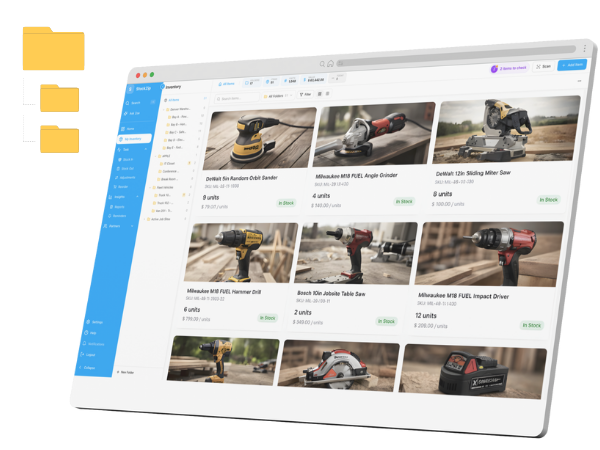
Set a reorder point per SKU and StockZip alerts you the moment stock drops below it — no spreadsheets, no manual checks. Free for 14 days, no credit card.