
Consignment Inventory
Consignment inventory is a supply arrangement where the supplier retains ownership of goods until the retailer sells them, transferring inventory risk back to the supplier.
How Consignment Works
Supplier Ships Goods. Consignor sends inventory to the retailer (consignee). Ownership stays with the supplier.
Retailer Sells Items. Consignee displays and sells goods. Title transfers to customer at point of sale.
Retailer Pays Supplier. Consignee remits the agreed amount per sale. Unsold items may be returned.
Consignment vs Wholesale
• Who owns the goods? Consignment: Supplier (until sold). Wholesale: Retailer (after purchase).
• When does retailer pay? Consignment: After items sell. Wholesale: At time of order/delivery.
• Unsold inventory. Consignment: Can be returned. Wholesale: Retailer's problem.
• Inventory risk. Consignment: Supplier bears risk. Wholesale: Retailer bears risk.
• Cash flow for retailer. Consignment: Better (no upfront payment). Wholesale: Worse (capital tied up).
• Supplier margin. Consignment: Often lower (more risk). Wholesale: Often higher.
Pros and Cons
For Retailers (Consignee)
✓ No upfront inventory cost
✓ No risk on unsold goods
✓ Can test new products safely
− Lower profit per sale
− Must track supplier's inventory
For Suppliers (Consignor)
✓ Get shelf space without sales effort
✓ Reach customers through retailers
✓ Maintain brand presence
− Bear all inventory risk
− Delayed payment (after sale)
Worked example: a consignment settlement
A boutique agrees to stock 40 scented candles from a local maker on consignment, at a 60/40 split in the boutique's favor on a $30 retail price. No money changes hands when the candles arrive — the maker still owns all 40, and the boutique has paid nothing upfront.
Over the month the boutique sells 15 candles for $450 total. It keeps 60% ($270) and remits 40% ($180) to the maker, and only for the units that actually sold. The 25 unsold candles are still the maker's property; the boutique returns them at no cost, having never carried the risk of the stock that didn't move.
That is the whole appeal in numbers: the boutique tied up zero cash to test a new product and paid $180 against $450 of sales it would not have made otherwise, while the maker traded a larger cut and delayed payment for shelf space it could not have bought outright.
Track consignment inventory with StockZip
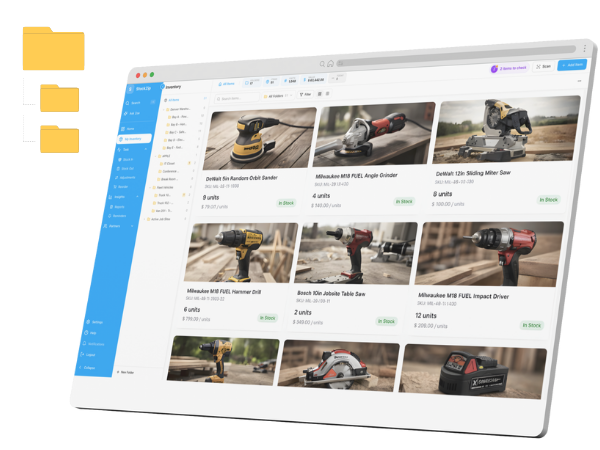
StockZip helps you track inventory regardless of ownership. Use folders and tags to keep consigned goods separate from owned stock and track what sells; valuation and settlement reporting live on the Starter plan and up.
Frequently asked questions
What is consignment inventory?
Consignment inventory is stock owned by a supplier (consignor) but held and sold by a retailer (consignee). The retailer only pays for items after they are sold to end customers.
How does consignment inventory work?
The supplier delivers goods to the retailer. The retailer displays and sells them. When items sell, the retailer pays the supplier their agreed share (usually wholesale price). Unsold items can be returned.
Who owns consignment inventory?
The supplier (consignor) retains ownership until the item is sold to an end customer. The retailer (consignee) never owns the goods; they simply store and sell them on behalf of the supplier.
What is the difference between consignment and wholesale?
With wholesale, the retailer buys inventory upfront and owns it. With consignment, the retailer does not pay until items sell and can return unsold goods. Consignment shifts risk to the supplier.
How is consignment inventory accounted for?
The consignor keeps consigned goods on their balance sheet as inventory. The consignee does not record the goods as an asset. Sales revenue is split based on the consignment agreement.
What are the risks of consignment for suppliers?
Suppliers bear the risk of unsold inventory, damage, or theft while goods are at the retailer. They also wait longer for payment since they only get paid after end-customer sales.