

Inventory Turnover
Inventory turnover is a ratio that measures how many times a business sells and replaces its inventory during a given period, calculated as COGS divided by average inventory.
The Formula
Inventory Turnover = Cost of Goods Sold (COGS) / Average Inventory
• Cost of Goods Sold (COGS): The direct costs of producing the goods you sold during the period. Found on your income statement.
• Average Inventory: (Beginning Inventory + Ending Inventory) / 2. Smooths out seasonal fluctuations.
Example Calculation
• Annual COGS: $500,000
• Beginning Inventory: $80,000
• Ending Inventory: $120,000
• Average Inventory: $100,000
• Inventory Turnover: 5.0
In this example, the business sold through its inventory 5 times during the year. That means, on average, inventory sat for about 73 days before being sold (365 / 5 = 73 days).
Industry Benchmarks
Turnover varies significantly by industry. Here are typical ranges:
• Grocery / Perishables: 12-20 turns per year
• Retail Apparel: 4-6 turns per year
• Electronics: 6-10 turns per year
• Automotive Parts: 4-8 turns per year
• Furniture: 3-5 turns per year
• Heavy Equipment: 1-2 turns per year
How to Improve Inventory Turnover
• Better demand forecasting: Use historical sales data and seasonality patterns to order the right quantities at the right time. See our guide to inventory forecasting for the practical playbook.
• Reduce lead times: Work with suppliers to shorten delivery times. Shorter lead times mean you can order less safety stock.
• Clear slow-moving stock: Use promotions, bundles, or liquidation to move dead stock. It frees up cash and warehouse space.
• Optimize reorder points: Set reorder points per SKU based on lead time and demand variability. Avoid blanket thresholds.
• Use ABC analysis: Focus on A-items (high value, high velocity). These drive most of your turnover and deserve close attention.
Track turnover with StockZip
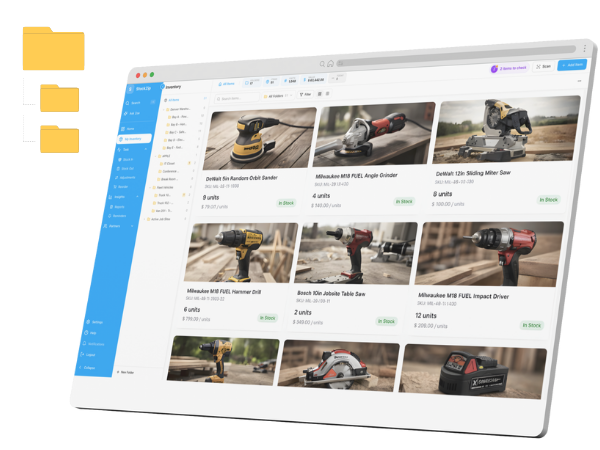
StockZip inventory management gives you real-time visibility into stock levels, movement history, and valuation — the data you need to calculate and improve your inventory turnover.
Frequently asked questions
What is a good inventory turnover ratio?
It varies by industry. Grocery and perishables often see 12-20 turns per year. Retail clothing might be 4-6 turns. Luxury goods or heavy equipment might be 1-2 turns. Compare to your industry benchmarks, not a universal number.
How do I calculate inventory turnover?
Divide your Cost of Goods Sold (COGS) by your Average Inventory for the period. For example, if COGS is $500,000 and average inventory is $100,000, your turnover is 5 (you sold through your inventory 5 times that year).
What is the inventory turnover formula?
The inventory turnover formula is: Inventory Turnover = Cost of Goods Sold (COGS) / Average Inventory. Average Inventory is calculated as (Beginning Inventory + Ending Inventory) / 2.
What does a low inventory turnover mean?
Low turnover suggests slow-moving inventory. You might have too much stock, the wrong products, or pricing issues. It ties up cash and increases holding costs. However, some industries naturally have lower turnover.
What does a high inventory turnover mean?
High turnover means you are selling through inventory quickly. This is usually good — less cash tied up, lower holding costs. But if it is too high, you might be understocked and losing sales to stockouts.
How can I improve my inventory turnover?
Strategies include: better demand forecasting, reducing lead times, clearing slow-moving stock with promotions, adjusting reorder points, using ABC analysis to focus on high-velocity items, and improving supplier relationships.
What is days sales of inventory (DSI)?
DSI is the inverse of turnover, expressed in days. It shows how many days of inventory you have on hand. Calculate it as: 365 / Inventory Turnover. If turnover is 5, DSI is 73 days.
How often should I calculate inventory turnover?
Most businesses calculate inventory turnover monthly or quarterly to track trends. Annual calculations give a big-picture view, but more frequent monitoring helps you spot issues early and make timely adjustments.
Is inventory turnover the same as stock turnover?
Yes, inventory turnover and stock turnover are the same metric. "Stock" and "inventory" are often used interchangeably, especially in retail contexts. The formula and interpretation are identical.
Why is my inventory turnover decreasing?
Decreasing turnover could indicate: slowing sales, overstocking, obsolete inventory building up, seasonal effects, or increased lead times causing you to hold more safety stock. Review your sales trends and inventory aging reports.