Barcodes vs QR Codes
Barcodes and QR codes both identify items by scanning, but differ in capacity and shape. A 1D barcode encodes roughly 20–25 characters in parallel lines; a 2D QR code packs up to about 7,089 digits in a square matrix, scans from any angle, and still reads when partly damaged.
Barcode (1D)
Linear, horizontal lines
• Fast scanning with dedicated scanners
• Universal retail/POS compatibility
• Smaller label footprint
• Limited data (20-25 characters)
• Requires line-of-sight alignment
QR Code (2D)
Square matrix pattern
• Stores thousands of characters
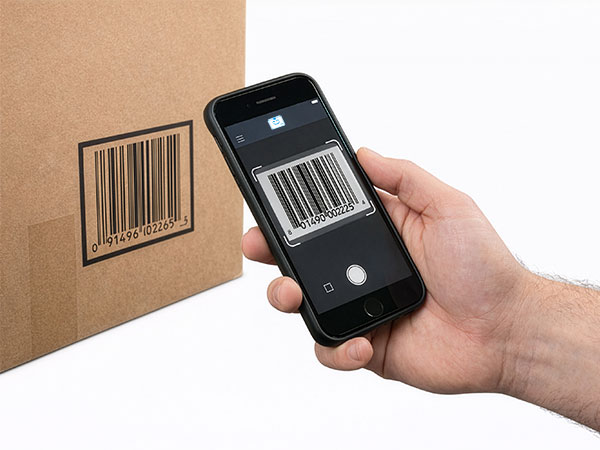
• Easy phone camera scanning
• Can link to URLs, images, forms
• Requires more label space
• Slower with some hardware scanners
Feature Comparison
• Data capacity — Barcode (1D): 20-25 characters. QR Code (2D): Up to 4,296 characters.
• Data types — Barcode (1D): Numbers, some text. QR Code (2D): Text, URLs, images, binary.
• Scanning speed — Barcode (1D): Very fast (hardware). QR Code (2D): Fast (phones), moderate (hardware).
• Error correction — Barcode (1D): None. QR Code (2D): Built-in (can read if 30% damaged).
• Label size — Barcode (1D): Narrow strip. QR Code (2D): Square, needs more space.
• Phone scanning — Barcode (1D): Requires app. QR Code (2D): Native camera works.
When to Use Each
Use Barcodes When:
• You have retail POS systems
• Speed is critical (warehouse picking)
• You use dedicated hardware scanners
• Label space is limited
• You only need SKU/product ID
Use QR Codes When:
• Staff use smartphones to scan
• You need to link to web content
• Asset tracking with detailed info
• Customer-facing applications
• You need error correction (outdoor use)
Label Printing Tips
Proper labeling ensures reliable scanning in any environment.
Sizing Guidelines
• Barcodes: Minimum 1.5" wide × 0.5" tall
• QR codes: Minimum 1" × 1" square
• Leave 0.1" quiet zone around codes
Material Recommendations
• Indoor: Standard paper labels work fine
• Outdoor: Use synthetic (polypropylene) labels
• High-wear: Laminate or use polyester labels
• Cold storage: Use freezer-grade adhesive
Printing
• Laser printers produce sharper codes than inkjet
• Thermal printers are ideal for high-volume labeling
• Always test scan before bulk printing
Scan both with StockZip
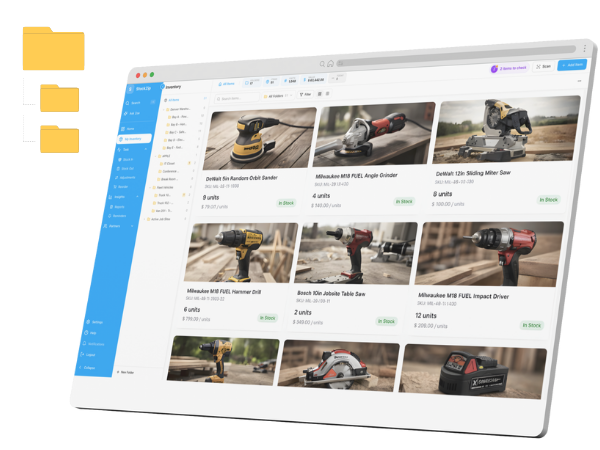
StockZip supports both barcode and QR code scanning using your phone camera or a Bluetooth scanner — look up items, adjust quantities, and record movements instantly. Scanning and item lookup are included on the free plan; printing your own barcode or QR label sheets is a paid feature on Starter and above.
Frequently asked questions
What is the difference between barcodes and QR codes?
Barcodes (1D) store data in horizontal lines and hold 20-25 characters. QR codes (2D) use a square matrix and can hold thousands of characters, including URLs, text, and images.
Which is better for inventory: barcode or QR code?
For simple inventory tracking (SKU lookup, quantity updates), barcodes are faster and more widely compatible. QR codes are better when you need to store more data or link to web content.
Can phones scan barcodes?
Yes, most smartphone cameras can scan both barcodes and QR codes. However, barcodes may require a dedicated barcode scanning app, while QR codes often work with the native camera app.
Are QR codes more expensive than barcodes?
The cost to generate and print is similar. QR codes require slightly more label space but can be printed on the same label stock as barcodes.
Which is faster to scan?
Traditional 1D barcodes are generally faster to scan with dedicated hardware scanners. QR codes are faster with phone cameras due to their larger, more visible pattern.
Can I use both barcodes and QR codes?
Yes, many businesses use barcodes for retail/POS scanning and QR codes for asset tracking or customer-facing applications. Some labels include both.