

Periodic Inventory
Periodic inventory is a system that updates stock records only at scheduled intervals — weekly, monthly, or annually — through a point-in-time physical count. Between counts the recorded quantity stays frozen, so the system reflects a snapshot rather than a live number.
How periodic inventory works
The business counts inventory on a schedule — weekly, monthly, quarterly, or annually — through a point-in-time physical count. Stock records are only updated after that count is finished, not as sales and receipts happen in between, so the system reflects a snapshot rather than a live number.
Where periodic inventory fits
Periodic inventory can work for small catalogs, low transaction volume, or operations that do not need accurate quantities between counts — a handful of slow-moving SKUs is a very different risk profile than a fast-moving retail floor. It also shows up as a fallback in businesses that started on a spreadsheet and never moved off it, not necessarily as a deliberate choice, which is usually the point where the gap between what the system says and what is on the shelf starts to matter.
Main weakness
The main weakness is stale data. Between counts, managers may not know what is actually available, which turns every decision made in that window — purchasing, quoting availability, planning a job — into a guess based on old numbers. The longer the interval between counts, the larger that blind spot gets.
Worked example: the blind spot between counts
A hardware store using periodic inventory counts all 2,300 SKUs once a month, on a Sunday when the store is closed. Right after the count, the shelf tag for a specific box of drywall screws reads 40 units — accurate as of that Sunday.
Three weeks later, the store has actually sold 18 boxes, leaving 22 on the shelf. But the system still says 40, because nothing updates between counts under a periodic system. A customer calls asking if 25 boxes are in stock; the answer given is “yes” based on the stale count, and the order can’t actually be filled when they arrive. Nobody finds out the number was wrong until either the customer complains or the next monthly count catches the gap.
Common mistakes with periodic inventory
Periodic inventory causes problems less because of the method itself and more because of how it gets used:
• Relying on the last count’s numbers for day-to-day decisions like purchasing or quoting availability, when those numbers are already stale by definition.
• Extending the interval between counts to save labor without recognizing that the blind spot between counts grows just as long, and that a longer interval also means a larger correction — and a bigger surprise — when the count finally happens.
• Using periodic inventory for fast-moving or high-value items where the cost of a stockout or overstock between counts outweighs the labor saved by not tracking continuously.
• Treating a periodic count as accurate simply because it was recent — count errors and miscounts still happen and go uncorrected until the next cycle.
Moving from periodic inventory in StockZip
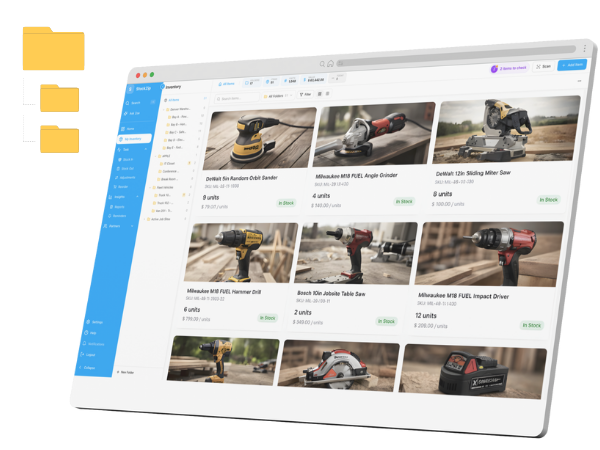
StockZip is built as a perpetual system — quantities update as transactions happen rather than waiting for a scheduled count — so a business moving off periodic counts doesn’t have to redesign its whole process. A clean starting count imported once, followed by barcode scanning on every receive, sale, and transfer, gets a periodic-inventory business to perpetual accuracy without extra manual counting, and cycle counts can still run on top for ongoing verification.
Frequently asked questions
What is periodic inventory?
Periodic inventory is a system where stock levels are updated at set intervals after physical counts.
Is periodic inventory cheaper?
It can be simpler to start, but errors and stockouts can become expensive as inventory movement increases.
What is the difference between periodic and perpetual inventory?
Periodic updates after point-in-time counts. Perpetual updates continuously, per transaction, as sales, receipts, and transfers happen.
Which businesses still use periodic inventory?
Small catalogs, low transaction volume, or operations where the cost of continuous tracking outweighs the value of always-current counts — a few dozen slow-moving SKUs, for example.
What’s the biggest risk of periodic inventory?
The blind spot between counts. Decisions made using the last count’s numbers can be based on stock levels that are weeks out of date.
Can I switch from periodic to perpetual?
Yes. Start with a clean count, label important items, and use scanning for future movements.