
Perpetual vs periodic inventory: which system fits your business
Perpetual vs periodic inventory is the decision that shapes everything else: how often you update stock, how much you trust the numbers, and how painful counts feel. Perpetual updates continuously on every transaction; periodic counts at set intervals. This guide covers the difference, the COGS-timing tradeoff, which suits a small business, and how barcode scanning makes perpetual practical without an ERP.
What is the difference between perpetual and periodic inventory?
A perpetual inventory system updates stock records continuously — every receipt, sale, transfer, and adjustment changes the quantity on hand the moment it happens, usually through a barcode scan or a point-of-sale transaction, and cost of goods sold is known at any time. A periodic inventory system does not track quantities between counts: you count physical stock at set intervals — weekly, monthly, or quarterly — and calculate COGS at the end of the period. In short, perpetual is always current; periodic is accurate only on counting day.
The dividing line is what happens between counts. Under a perpetual system, the record moves with the stock, so at any given hour you can ask "how many do I have" and get a trustworthy answer. Under a periodic system, the record is frozen at the last count and drifts further from reality with every untracked transaction until the next one.
Neither is "the accounting-correct" choice on its own — both can produce valid financial statements. The real question is operational: how current do your numbers need to be for the decisions you make daily, and how much effort can you spend keeping them that way? The rest of this guide answers it for a small business.
Perpetual vs periodic: side by side
Quantities update continuously on every transaction under perpetual, and only after a scheduled physical count under periodic. Accuracy between counts is therefore higher for perpetual (when workflows are disciplined) and effectively unknown for periodic until the next count reconciles it. That difference in freshness is the whole reason the two systems exist.
The labor pattern is opposite in shape. Perpetual spreads effort thinly across every day — a scan here, a small correction there — while periodic concentrates it into spiky, painful counting events plus the reconciliations that follow. Perpetual needs some technology (barcode scanning or a POS feeding inventory software); periodic can run, at minimum, on a count sheet and a calculator.
Best-fit and biggest risk follow from that. Perpetual suits warehouses, ecommerce, and tool tracking — anywhere stock moves often and decisions depend on current numbers — and its biggest risk is that a sloppy process creates false confidence: bad data you trust is worse than no data. Periodic suits very small catalogs or low transaction volume, and its biggest risk is that you make decisions on stale numbers between counts.
How COGS timing differs
In a perpetual system, cost of goods sold is recorded on every sale as it happens, so the figure is available in real time and inventory valuation is always current. You can see margin per sale and know the value of stock on hand at any moment — useful when you are pricing, reordering, or checking whether a slow month is a volume problem or a margin problem.
In a periodic system, COGS is derived only at period end with the formula: beginning inventory + purchases − ending inventory = COGS. Between periods you have no reliable margin visibility, because the "ending inventory" half of the equation is unknown until you count. That is fine for a business that reviews performance quarterly and poor for one making weekly pricing or purchasing calls.
The tradeoff is that perpetual’s real-time COGS is only as good as its transaction capture. A missed scan quietly corrupts both the quantity and the running cost until the next cycle count catches it — which is exactly why disciplined scanning and periodic verification counts are not optional extras in a perpetual system but the thing that keeps it honest.
Which should a small business choose?
If you reorder regularly, sell online, move stock between locations, or issue tools to staff, perpetual inventory usually wins — but only if you can keep updates fast and simple. The value of always-current numbers is real, and so is the cost of maintaining them; the decision hinges on whether that maintenance is cheap enough to sustain.
Periodic is a reasonable choice only for a genuinely small catalog, low transaction volume, or a business where counting occasionally is truly cheaper than maintaining continuous records. The historical barrier to perpetual — the labor of updating a record on every single transaction — is what made periodic the default for small operations for decades.
That barrier has largely disappeared. Barcode scanning replaces the manual entry that made perpetual expensive, so for most small businesses in 2026 the practical answer is a perpetual system kept honest with small periodic cycle counts — the accuracy of perpetual with periodic verification as a backstop. The next section is how to run it without an ERP.
How to run perpetual inventory without an ERP
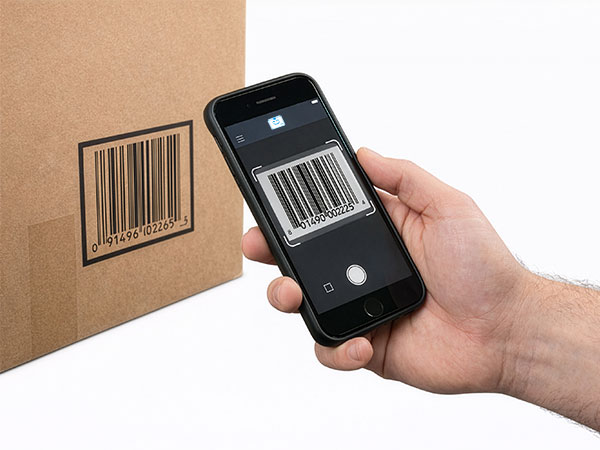
The turning point is scanning. When a team can scan, confirm, and move on, perpetual inventory stops feeling like overhead and starts feeling like insurance — a phone-based barcode system is the most common way small teams run perpetual without an ERP. Start by labelling your top movers first, and do not wait for a perfect, fully-labelled catalog before you begin; the fast-moving items are where accuracy pays off soonest.
Standardize your locations — warehouse to shelf to bin — so every quantity is tied to a place, then scan to receive, transfer, and adjust rather than promising to "fix it later." Later never comes, and every deferred update is the exact untracked movement that makes a perpetual record drift. The scan at the moment of the movement is the whole discipline.
Keep the perpetual numbers honest with small, rotating cycle counts instead of one big annual event, and use low-stock alerts so reorder decisions come from the system rather than memory. That combination — scan every movement, standardize locations, cycle count to verify, alert to reorder — is a working perpetual system with no ERP and no six-week implementation.
Common mistakes
The most common trap is the "aspirationally perpetual" spreadsheet. A spreadsheet updated on every transaction is technically perpetual, but manual typing means missed and mistyped entries accumulate, so the running total drifts from reality while everyone treats it as current. Most small-business spreadsheets are meant to be perpetual and rarely are — that gap between intent and reality is exactly what a scan-based system closes, because the scan replaces the typing people skip.
The second mistake is adopting perpetual without the discipline it requires. Perpetual’s biggest risk is false confidence: if scanning is inconsistent, you get numbers that look authoritative and are quietly wrong, which is worse than a periodic system you know is only current on counting day. Perpetual without disciplined capture is not an upgrade.
The third is running perpetual with no verification counts at all. Even a well-scanned system accumulates small errors — a mis-scan, a damaged item never written off — and without rotating cycle counts to catch them, the drift compounds silently. Perpetual and periodic are not strictly either/or in practice: the strongest small-business setup is perpetual day to day with periodic cycle counts as the backstop.
Perpetual inventory in StockZip
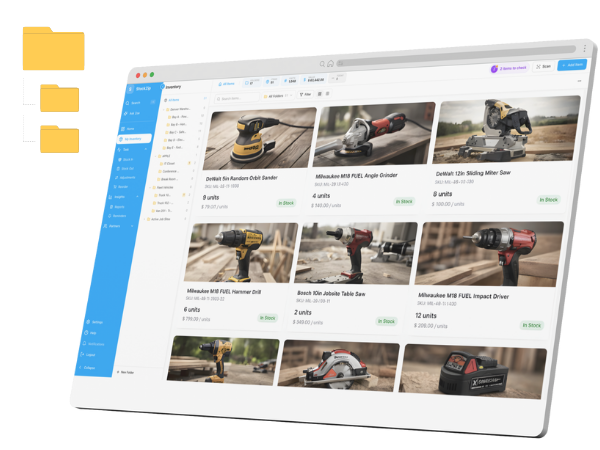
StockZip is built to run a perpetual system without an ERP. Each barcode scan updates the quantity on hand the moment stock moves and writes a timestamped movement record, so the numbers stay current and every change is traceable. Scanning, folders and locations, and low-stock alerts are all on the Free plan, which covers the scan-every-movement and alert-to-reorder habits directly.
For the periodic-verification half, the stock count task lets you run small rotating cycle counts that reconcile the perpetual record against what is physically on the shelf — the backstop that keeps a perpetual system from drifting. To be honest about scope: StockZip tracks quantities and movement history, not your general ledger, so it does not post automatic COGS or journal entries the way an accounting package would; the real-time-quantity benefit of perpetual is what it delivers, not the bookkeeping side.
The honest summary: StockZip gives a small team the operational core of a perpetual system — current quantities by scan, a per-item movement trail, low-stock alerts, and cycle counts to verify — without the cost or implementation of an ERP. Pair it with your accounting tool for the financial statements, and you have perpetual accuracy where it matters day to day.