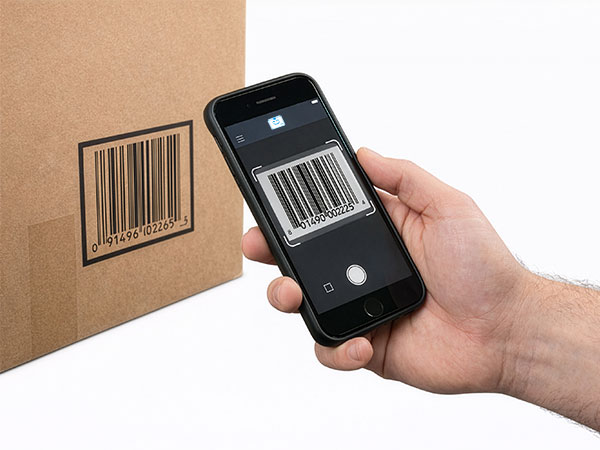

Scanning a barcode with a phone
Scan with your phone

Count, move, and find stock with the camera already in your pocket. Works offline, syncs later.

Try the live demo →
Organized stock on shelves
Switching from Sortly?

Bring folders, photos, and history over in an afternoon — with pricing that stays predictable at renewal.

See pricing →
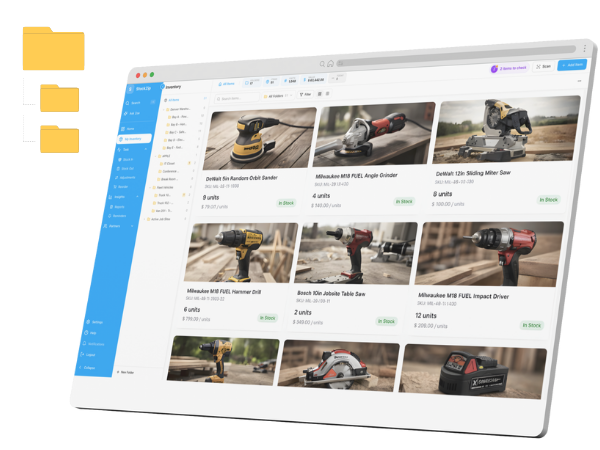
Folder-style inventory list
Free spreadsheet templates

Excel, Google Sheets, and printable count sheets — ready to download, no signup needed.

Get the templates →
Free tool

Free barcode generator

Generate Code 128 barcodes and QR codes for inventory in your browser — up to 50 at a time. Print a label sheet or download PNGs. No signup, no watermark, nothing uploaded.

Start freeSee the barcode inventory system

Free for 100 items · no credit card

Codes are generated in your browser — nothing you type is uploaded or stored.

Your barcodes will appear here.

How to make inventory labels with this generator

Choose barcode or QR: pick Code 128 for classic barcode labels, or QR for phone-first scanning and damaged-label resilience. Then paste your values — one per line, up to 50 at a time — such as SKUs, asset IDs, or bin names copied straight from a spreadsheet column.

Click Generate and test-scan one code on screen with your phone camera before committing to a batch. Finally, print the whole batch as a single label sheet on a laser, inkjet, or thermal printer, or download individual PNGs to drop into your own label template.

Everything runs in your browser, so nothing you type is uploaded or stored — the tool works the same whether you generate one code or the full batch of fifty.

Should inventory labels use barcodes or QR codes?

For internal inventory labels, QR codes are usually the better default: they scan faster from any angle, keep working when partially damaged or dirty, and hold more data in less label space. Classic Code 128 barcodes remain the right choice when labels will be read by older laser scanners, or when you want the human-readable value printed underneath in the familiar retail style.

Products you resell should keep their existing UPC/EAN manufacturer barcodes — good inventory software reads those as-is, so there is no need to relabel them. The full breakdown is in the barcodes vs QR codes glossary entry and the QR codes for inventory guide.

What should you encode in an inventory barcode?

Encode the SKU or a short unique ID — not the item name, price, or description. The barcode only needs to identify the item; your inventory software holds everything else and stays editable without reprinting labels. Keep SKUs consistent (for example TOOL-DRILL-01) and avoid special characters that some scanners misread.

If you do not have SKUs yet, an ascending code like STZ-0001 works fine. A label only pays off when scanning it updates your stock — that is the difference between a printed sticker and a barcode inventory system, where a scan checks items in and out, fires low-stock alerts, and keeps a complete audit trail.

Frequently asked questions

Is this barcode generator really free?
Yes, completely. Generate Code 128 barcodes and QR codes, batch up to 50 values at a time, print a label sheet, or download PNGs — no signup, no watermark, no daily limit. Everything runs in your browser, so nothing you type is uploaded or stored. StockZip publishes it free because teams that label their stock often want inventory software next; that upgrade is optional.
What barcode format should I use for inventory labels?
Use Code 128 for classic barcode labels — it encodes letters, numbers, and punctuation compactly and every scanner reads it; it is the standard choice for internal SKUs and asset tags. Use QR codes when labels will be scanned by phones, may get dirty or damaged, or need to hold more data: QR codes scan faster from any angle and survive partial damage. Retail products you resell usually keep their existing UPC/EAN manufacturer barcodes.
Can I generate barcodes in bulk?
Yes. Paste up to 50 values — one per line, for example a column of SKUs copied from a spreadsheet — and generate them all at once, then print them as a single label sheet on a laser or thermal printer. For hundreds of items, StockZip generates and prints labels directly from your imported item list, which skips the copy-paste step entirely.
What should I encode in an inventory barcode?
Encode the SKU or a short unique ID — not the item name, price, or description. The barcode only needs to identify the item; your inventory software holds everything else and stays editable without reprinting labels. Keep SKUs consistent (for example TOOL-DRILL-01) and avoid special characters that some scanners misread. If you do not have SKUs yet, an ascending code like STZ-0001 works fine.
How do I print these labels?
Click "Print label sheet" to open a printable grid — it works with a normal laser or inkjet printer on plain paper or adhesive label sheets (such as Avery templates), and with thermal label printers via your browser print dialog. For single labels, download the PNG and place it in your label template at the size you need. Test-scan one printed label before printing hundreds.
How do I use these barcodes with inventory software?
Print the labels, stick them on items or bins, and connect them to software that updates stock when you scan. In StockZip you can import your item list from a spreadsheet, and scanning a label with your phone camera pulls up the item to check in, check out, or adjust — free for up to 100 items. See how a full barcode inventory system works at stockzip.app/barcode-inventory-system.

Related tools

All tools →

Automate reorder alerts with StockZip

Set a reorder point per SKU and StockZip alerts you the moment stock drops below it — no spreadsheets, no manual checks. Free for 100 items, no credit card.

Start freeSee low-stock alerts
Free for 100 items
No credit card
Start free