

Scanning a barcode with a phone
Scan with your phone

Count, move, and find stock with the camera already in your pocket. Works offline, syncs later.

Try the live demo →
Organized stock on shelves
Switching from Sortly?

Bring folders, photos, and history over in an afternoon — with pricing that stays predictable at renewal.

See pricing →
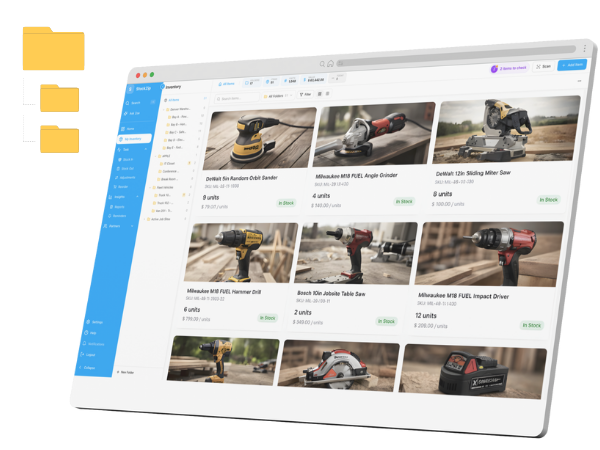
Folder-style inventory list
Free spreadsheet templates

Excel, Google Sheets, and printable count sheets — ready to download, no signup needed.

Get the templates →
Home › Learn › Templates › Cycle count sheet

Free cycle count sheet template — printable inventory count sheet

A working cycle count sheet for physical inventory: record what the system expects, what you actually count, and the variance between them. Print it for the clipboard or fill it in on screen. No email, no watermark.

Jump to the printable sheet

Free · no email required · print or fill in · updated July 2026

For the clipboard

The printable cycle count sheet

This is the whole template — right here on the page, free and un-gated. Print it for a physical count, or use the field guide below to rebuild it in any spreadsheet. No download, no email, nothing to unzip.

  • Expected, counted and variance columns — not just a stock list
  • Counted-by, verified-by, date and location header for audits
  • Blank rows sized to write in with a pencil on a clipboard
Opens your browser print dialog
CYCLE COUNT SHEETPage 1 of 1
Location: Date: Counted by: Verified by:
LocationItem / SKUExpectedCountedVariance
stockzip.app/learn/templates — free to copy and share

What goes on the count sheet

Eight fields capture everything an accurate physical inventory count needs — the variance column is what turns a plain stock list into a real cycle count sheet.

FieldWhat it capturesExample
LocationWhere the count is being performedAisle 3, Shelf B
Item name / SKUThe item being countedWidget A (WGT-001)
Expected quantityWhat the system says should be there50
Counted quantityWhat you physically count48
VarianceCounted minus expected-2
CounterWho performed the count (accountability)John D.
Date / timeWhen the count was performed2026-07-02 14:30
NotesReason for variance or other observations2 units damaged

Cycle count scheduling strategies

Cycle counting spreads the work across the year instead of one shutdown. Pick the schedule that fits how your stock moves.

ABC analysis

Count A-items weekly, B-items monthly, C-items quarterly by value and velocity.

Zone rotation

Count one zone, aisle or bin each day until every location is covered, then repeat.

Random sampling

Pick items at random each period to keep counts honest and unpredictable.

High-velocity focus

Count your fastest-moving SKUs more often — that is where errors compound.

Common cycle count mistakes

Counting during active operations — Stock moves while you count, creating variances that are not real errors.
Skipping the recount — A large variance should always be verified before you adjust the system.
Not documenting the reason — Knowing why a variance happened is what stops it happening again.
Counting too rarely — Problems compound quietly between counts — little and often beats one big count.
Ignoring the pattern — Repeat variances in the same bin or SKU signal a process problem, not bad luck.

How to use these templates

1
Plan the count
Pick the items or a single location to count and pre-fill the Expected column from your system. Cycle counting means you do a slice today, not the whole warehouse.
2
Count blind, then reveal
Walk the shelves and write the Counted figure without looking at Expected — a blind count stops you from “confirming” the number you hoped to see.
3
Work the variance
Subtract expected from counted. Recount anything with a large gap before you touch the system, and write the likely cause in Notes.
4
Investigate and adjust
Once a variance is verified, correct the system count and log the reason. Repeated gaps in the same bin or SKU are a process signal, not a one-off.

Template questions

What is the difference between a cycle count and a full physical inventory count?
A full physical count stops operations to count everything at once, usually yearly. Cycle counting counts a small slice on a rolling schedule so the whole catalogue gets covered over time without a shutdown. This sheet works for either — it is the same expected-vs-counted-vs-variance grid.
How do I run a blind count with this sheet?
Print or fill it with the Expected column hidden or folded back, record the Counted figure first, then reveal Expected and calculate the variance. A blind count removes the bias to write down the number you already expected.
How often should I run cycle counts?
Count your fast-moving and high-value (A) items most often — weekly is common — and slower C items quarterly. The scheduling strategies above (ABC, zone rotation) let you cover everything without a single big count.
When should I stop using a paper count sheet?
When two people count at once, when re-keying paper counts eats an hour a week, or when you need a history of who adjusted what. That is usually around 100 items — the point where scanning to count pays for itself.

Skip the paper — scan to count in StockZip

StockZip has a built-in cycle count workflow: scan an item to count it, see expected vs actual as you go, and flag variances automatically. It works offline in the warehouse and keeps a full audit trail of every adjustment — free for your first 100 items.

Start freeWarehouse features

Keep exploring

All templates →
Free cycle count sheet
Print it — no email
Jump to the sheet