
The best warehouse management software depends on whether you need a full WMS or lightweight scan-first tracking — we compare 6 tools by real fit.
What a WMS actually is — and when you don’t need one
The phrase "best warehouse management software" hides a fork in the road, and picking the wrong branch is the most expensive mistake in this category. A true warehouse management system (WMS) is heavy operational software: it optimizes where stock is slotted, directs wave or zone picking to shorten walking paths, schedules inbound and outbound dock doors, manages labor and productivity, and often drives conveyor or automation hardware. That machinery is essential for a high-throughput fulfillment center — and pure overhead for a stockroom that mostly receives, stores, counts, and ships a modest volume.
So before you shop, answer one question honestly: do you need a WMS, or do you need warehouse inventory tracking? If you are running a multi-zone fulfillment operation with pickers walking miles a day, dock congestion, and labor you need to measure, you need a real WMS and should buy one of the heavyweight tools below on purpose. If you are a small warehouse or stockroom that needs to know what you have, where it is, and when to reorder — with fast mobile scanning and accurate counts — a full WMS is more system, cost, and implementation than the job requires, and a lightweight tracking tool will serve you better and cheaper.
This roundup covers both ends of that spectrum. We name the real WMS-grade and distribution-grade tools for operations that need them, and we position lighter tools — including our own, StockZip — honestly as the pick for small operations that do not. Where we quote a price it is a published rate as of July 2026, directional rather than precise, since the heavier tools are quote-based and change often. Re-check the vendor before you commit.
How to choose
Start with throughput and complexity, not features. How many orders ship per day, across how many zones and channels, with how many pickers? The higher those numbers, the more a true WMS earns its keep; the lower they are, the more a WMS becomes shelfware you paid to implement.
Then weigh five practical criteria. One: fulfillment depth — do you need directed picking, slotting, and pack-station workflows, or just accurate stock and reorder alerts? Two: channel and 3PL fit — are you fulfilling across marketplaces, or for outside clients, which pushes you toward fulfillment-grade tools? Three: total cost and implementation — quote-based WMS platforms carry setup time and onboarding cost, not just a subscription. Four: mobility and ease — will floor staff actually use it on a phone or handheld, or does it need training? Five: data portability — can you export to CSV and leave without a fight? Answer those before a demo dazzles you.
It also pays to separate the software decision from the hardware and process decisions it triggers. A true WMS often assumes rugged handheld scanners, a labeled and mapped facility with defined bins and zones, and staff trained on directed workflows — real costs and change-management effort on top of the subscription. Lightweight tracking tools lean on the phones your team already carries and a simple folder structure, so they stand up in days rather than months. Be honest about how much operational change your warehouse can absorb right now; the best-fitting software is the one your floor will actually run, not the one with the most capable spec sheet.
ShipHero — best for ecommerce fulfillment and 3PLs
ShipHero is a cloud WMS purpose-built for ecommerce fulfillment and third-party logistics providers. It brings the genuine warehouse toolkit — directed and batch picking, mobile pick-pack workflows on handhelds, multi-warehouse routing, shipping-label automation, and features designed for 3PLs to manage multiple clients under one roof. For a brand shipping high ecommerce volume, or a 3PL running fulfillment for others, ShipHero is built for exactly that operation and is a well-regarded name in the space.
The honest limitation is that ShipHero is fulfillment-grade software with fulfillment-grade weight and cost. Pricing is quote-based and lands well above a simple tracking app, implementation is a real project rather than a weekend setup, and the value only materializes at genuine order volume. A small warehouse shipping a handful of orders a day would be buying (and configuring) picking and 3PL machinery it will never fully use. It is the right tool once fulfillment throughput is your bottleneck — and premature before then.
Fishbowl — best for QuickBooks manufacturing warehouses
Fishbowl is a long-established inventory and warehouse platform best known for tight QuickBooks integration and manufacturing depth. It handles multi-location warehouse inventory, work orders and bills of materials, purchase and sales orders, and barcode-driven warehouse workflows, with a large installed base among small-to-mid manufacturers and wholesalers who keep their books in QuickBooks. For a warehouse attached to a manufacturing operation running on QuickBooks, Fishbowl connects the two in a way lighter tools cannot.
The limitations are cost, weight, and modernity. Fishbowl is quote-based and lands as a substantial upfront and ongoing investment with a real implementation curve, and it carries a reputation for a heavier, more desktop-era experience than newer cloud-native platforms. It is also manufacturing-slanted — if you do not build products, much of its depth sits idle. For a QuickBooks-based manufacturer it is a proven workhorse; for a pure distribution warehouse or a small stockroom, it is more system than the job needs.
Cin7 — best for multichannel distribution at scale
Cin7 is an inventory and order-management platform built for brands and distributors selling across many channels — direct store, marketplaces, wholesale, and retail — with deep integrations, built-in EDI, and 3PL connectivity. For a growing distribution operation that needs one source of truth across several warehouses and sales channels, Cin7 is designed for exactly that complexity and is a strong choice in the multichannel tier.
The honest limitation is scope and commitment. Cin7 is quote-based, sits at the higher end of the market, and takes real implementation time — often with onboarding support — so the breadth of features only pays off if you are genuinely multichannel at volume. A single-channel warehouse or a small operation will pay for connectivity and automation it never switches on. It is also more an inventory-and-order platform than a floor-level WMS: strong on channel orchestration, lighter on directed-picking and labor management than a dedicated fulfillment WMS like ShipHero.
Finale Inventory — best for high-volume multichannel on a budget
Finale Inventory is a cloud inventory and warehouse platform aimed at multichannel sellers and warehouses that need serious barcode workflows without top-tier enterprise pricing. It does mobile barcode receiving, picking, and cycle counting, multi-location stock, order management, and multichannel sync, and it has a reputation as a capable, more approachable middle option between a simple tracking app and a full enterprise WMS. For a growing warehouse that has outgrown lightweight tools but is not ready for a heavyweight WMS project, Finale is a sensible landing spot.
The limitation is that Finale is a genuine step up in complexity and cost from a simple tracking tool — subscription pricing that scales with usage and features, and a setup that rewards some configuration effort. It is more than a two-person stockroom needs and less than a high-throughput fulfillment center with slotting and labor demands will eventually want. Its sweet spot is the middle of the market: real barcode-driven warehouse work at a more accessible price than the enterprise names, provided you are ready to invest in setting it up properly.
Zoho Inventory — best for order-centric small warehouses in an ecosystem
Zoho Inventory is an order-centric inventory tool that shines when you already run the wider Zoho suite. It handles sales and purchase orders, multi-warehouse stock, multi-channel listings, and shipping integrations, and it connects cleanly to Zoho Books and CRM. For a small warehouse whose work is driven by orders — and whose business already lives in Zoho — it is a capable, well-supported option that keeps inventory, accounting, and customers in one ecosystem.
The limitations are two. First, Zoho tiers by monthly order volume, not item count — as of July 2026 its published plans run from a free tier capped at 50 orders per month up through Standard, Premium, Plus, and Enterprise, with extra users and warehouses billed above each plan’s allowance — so a busy season can bump your tier. Second, it is an inventory and order tool, not a floor-level WMS: it does not do directed picking, slotting, or labor management. It is a strong fit for an order-driven small warehouse inside the Zoho world, and a weaker fit if you need true warehouse-floor operations or are outside that ecosystem.
StockZip — best for lightweight small-operation warehouse tracking
Here is the honest positioning, because this is our product and this post is about warehouses: StockZip is not a warehouse management system. It has no slotting optimization, no wave or zone picking, no dock or yard scheduling, and no labor management. If you run a high-throughput fulfillment operation that needs those, buy one of the WMS-grade tools above — ShipHero, Fishbowl, Cin7, or Finale — on purpose. We would rather tell you that plainly than sell you a tracking app dressed up as a WMS.
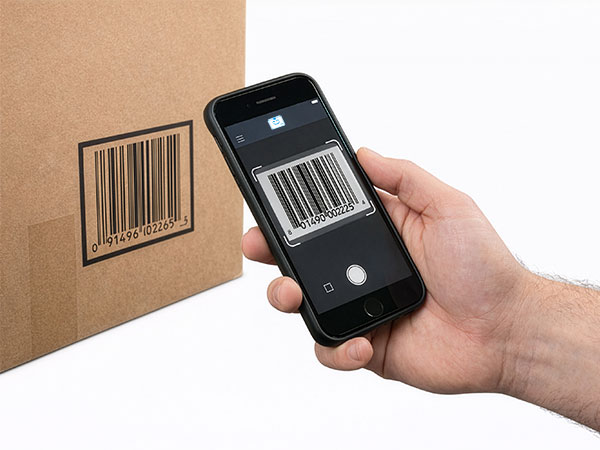
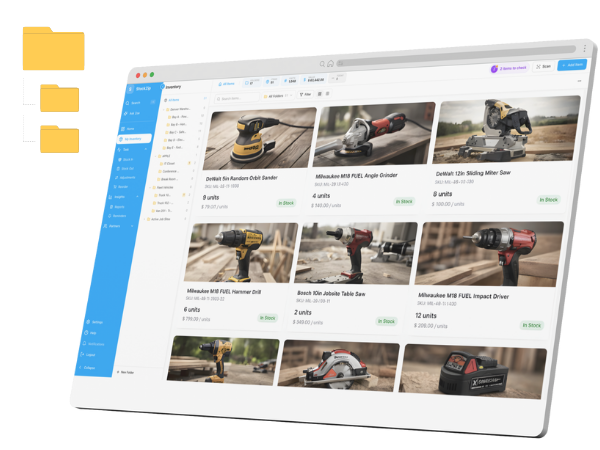
What StockZip is, is the fast, scan-first tracking layer for a small warehouse or stockroom that does not need a full WMS. The core loop — phone barcode or QR scanning, nested folders and locations, low-stock alerts, item photos, and CSV import and export — is free forever for up to 10 items and one user, no card. Paid plans add the operational layer: Starter unlocks check-in/check-out, cycle counts, custom fields, label printing, an audit trail, and reports; Pro adds pick lists, purchase and sales orders, receiving, transfers between locations, invoices, lot and serial tracking, and integrations. Pricing is flat with a bundled user allowance, and your signup price is your renewal price, in writing.
So the honest fit is narrow and real: if your warehouse mostly receives, stores, counts, transfers, and reorders — and you want floor staff scanning on the phones already in their pockets at a predictable price — StockZip does that quickly and cheaply, and Pro’s pick lists and receiving cover basic order fulfillment. If your bottleneck is picking efficiency, slotting, dock scheduling, or labor productivity across a big operation, that is a real WMS job and StockZip is the wrong tool for it. Pick by what your warehouse actually struggles with.
Signs you’ve outgrown a lightweight tool (or bought too heavy)
Because the WMS-versus-tracking choice is the one that costs the most to get wrong, it helps to know the signals in both directions. You have outgrown a lightweight tracking tool when picking becomes your bottleneck: staff walking inefficient paths because nothing directs them, mispicks climbing as order volume grows, dock congestion at receiving and shipping, or a need to measure and manage labor productivity across a shift. Those are true-WMS problems, and no amount of faster scanning solves them — that is your cue to move to ShipHero, Cin7, or a comparable fulfillment-grade platform.
You have bought too heavy — the more common and quieter mistake — when your expensive WMS is mostly used as a stock database. Signs include an implementation that dragged on for months, floor staff who avoid the software because it is complex, whole modules (slotting, wave planning, labor management) switched off, and a subscription plus onboarding bill that dwarfs the value you actually get. If a full WMS sits half-used, you did not need a WMS; you needed warehouse inventory tracking, and a lighter tool would have shipped value in a week at a fraction of the cost.
Most small operations sit comfortably in the lightweight tier for years, and the honest move is to stay there until a real fulfillment bottleneck forces the upgrade — then upgrade decisively. Buying WMS machinery in anticipation of growth you have not reached is how warehouses end up paying enterprise prices for a glorified spreadsheet.
Which one is right for your operation
Sort by throughput and workflow. High ecommerce or 3PL fulfillment volume with picking and labor as your bottleneck: ShipHero. A warehouse attached to QuickBooks-based manufacturing: Fishbowl. Multichannel distribution across many channels and warehouses at scale: Cin7. Growing multichannel warehouse work that needs real barcode workflows without enterprise pricing: Finale Inventory. Order-driven small warehouse already living in the Zoho ecosystem: Zoho Inventory.
And a small warehouse or stockroom that mainly needs fast, accurate, mobile stock tracking — receiving, counts, transfers, reorder alerts, and basic pick-and-receive — at a predictable price, without the cost and setup of a full WMS: StockZip. The rule of thumb is simple. If you need a warehouse management system, buy a real one from the list above and budget for the implementation. If you need warehouse inventory tracking, do not overpay for WMS machinery you will never switch on.
The bottom line
The best warehouse management software is the one matched to your throughput. Most content in this category assumes everyone needs a full WMS; most small operations do not, and buying one anyway means paying for slotting, wave picking, and labor management that never get used. Decide honestly which side of the WMS-versus-tracking line you are on, then shortlist within it — and confirm you can export your data before you commit.
If you genuinely run fulfillment at volume, one of the heavyweight tools here is the right, deliberate choice. If you run a small warehouse that mostly needs to scan, count, transfer, and reorder, try StockZip free for 14 days and add pick lists, receiving, and reports only when you actually need them. Either way, buy the right weight of tool on purpose — that decision matters more than any single feature comparison.