
RFID asset tracking — or the barcode alternative most teams actually need
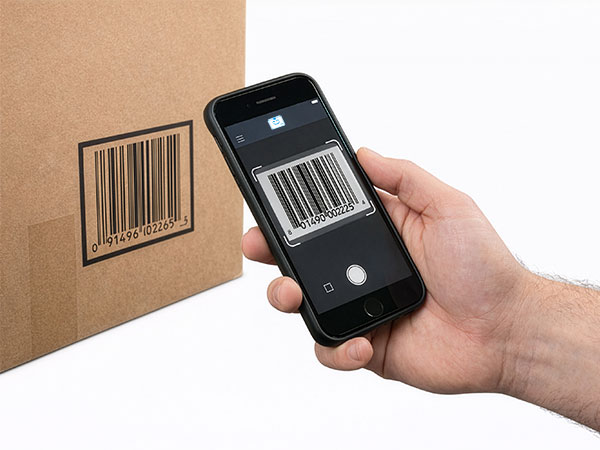
Searching for RFID asset tracking usually means one thing: you want to know what you own, where it is, and who has it. StockZip does exactly that with barcode and QR labels scanned on the phone in your pocket — no readers, no portals, no five-figure rollout. To be straight with you: StockZip is not an RFID reader. If you need true RFID hardware for hands-free bulk reads, that is a different category — but for most small teams, a scan-first register is the cheaper path to the same answer.
Try everything free for 14 days · no credit card · no RFID hardware to buy
Why teams shop for RFID asset tracking
Assets get moved, reassigned and retired, but the spreadsheet updates at a desk days later — so it is always wrong. StockZip updates from the scan itself, at the moment the asset moves, so the register reflects reality instead of last week.
Something walks out with a person and nothing logged the hand-off. Scan an asset out to someone and its custody — who, when, which asset — lands in the audit trail automatically, so tracing it down is a lookup, not a hunt.
A vendor priced readers, antennas, portals and integration into the thousands for a problem that is really “where is our stuff.” StockZip is the register — assets, owners, serials, locations — that you stand up in an afternoon on hardware you already own, and you can add RFID later if you ever truly need bulk reads.
Tag it. Detail it. Check it out. Audit it.
Four steps your team learns in minutes — no reader to mount, no site survey, no middleware. Scanning, the folder tree and photos are free; check-out, custom fields, the audit log and label printing are on Starter.
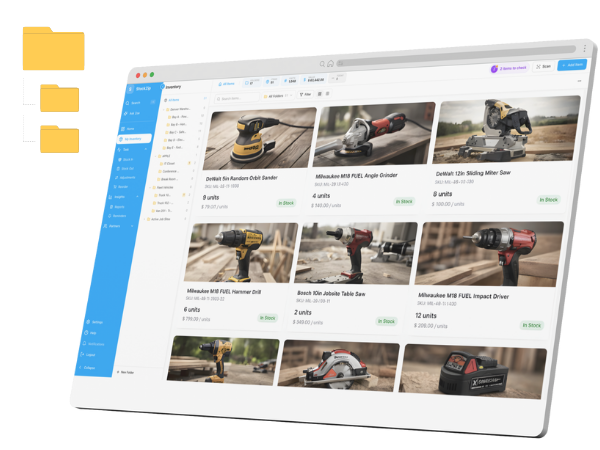
Sort assets into a folder tree — by site, room or department, up to six levels deep. Reuse a barcode an item already carries, or print your own QR asset label, then scan to open its card in about two seconds. (Folders and scanning are free; label printing is a Starter feature.)
Attach photos and record serial number, model, warranty expiry, purchase cost — and, if you use RFID tags elsewhere, the tag number — as custom fields, so an audit or a warranty claim is a two-second lookup. StockZip stores that RFID number; it does not read the tag. (Photos are free; custom fields are a Starter feature.)
Assign an asset to a person or a job and StockZip logs who took it and when. Check it back in when it returns, and the whole custody history stays on the asset. (Check-in / check-out is a Starter feature.)
Walk a room, scan everything, and instantly see what is missing versus what should be there — even offline. Every add, move and check-out is written to a full audit log. (Scan-based counts are free; the full audit log is a Starter feature.)
RFID asset tracking FAQ
Straight answers — including plainly where StockZip is not an RFID system.