
Asset Tag
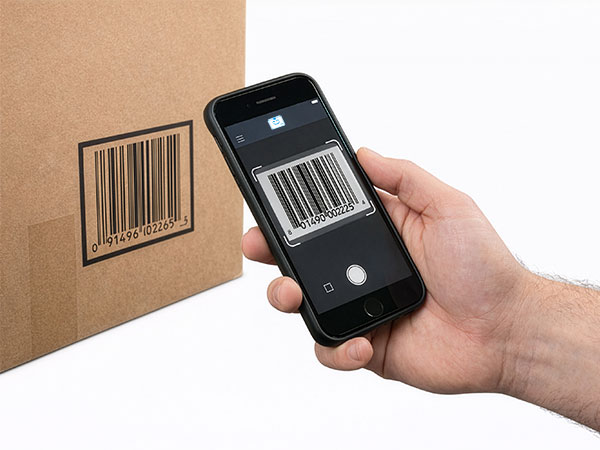
An asset tag is a label or chip attached to a physical asset to give it a unique, machine-readable identifier — typically a barcode, QR code, RFID, or NFC tag.
What an asset tag actually is
A tag is two things: a unique ID, and the physical thing carrying it. The ID is what your software cares about. The physical carrier — paper sticker, polyester label, metal foil, plastic RFID inlay — is what survives the asset's environment.
Companies tag assets for four reasons, in roughly this order:
• Audits and depreciation. Finance needs to prove the asset exists and matches the books.
• Loss prevention. Tagged laptops are harder to “lose.”
• Maintenance. A scan pulls up service history, warranty, next PM date.
• Faster check-in / check-out. A field tech grabs a drill, scans, and it's logged in two seconds.
If you're doing none of the above, you don't need tags. If you're doing any of them, you do.
The five tag types
• Barcode (1D) — read method: optical, line-of-sight. Typical cost per tag: $0.02–$0.10. Best for high-volume, low-cost items.
• QR code (2D) — read method: smartphone camera. Typical cost per tag: $0.02–$0.15. Best for mixed staff with phones, more data per tag.
• RFID (passive) — read method: radio, no line-of-sight. Typical cost per tag: $0.10–$0.50. Best for bulk scans, fast inventories.
• NFC — read method: tap-to-read on phone. Typical cost per tag: $0.20–$0.60. Best for one-off field interactions, tools, equipment.
• GPS — read method: cellular / satellite. Typical cost per tag: $15–$50 + monthly fee. Best for high-value moving assets (trailers, generators).
Barcodes and QR codes need a clean line of sight and one-at-a-time scanning. RFID reads dozens of tags at once from a meter or more away — great for sweeping a stockroom in 60 seconds, but the readers cost real money. See barcodes vs QR codes for the optical side, and the RFID asset tracking guide for the radio side.
Materials matter more than people think
The chip or barcode is the easy part. What kills tags is the surface they're stuck to and the environment they live in.
• Paper labels. Cheap, fine for indoor office gear. Don't survive a freezer, an oily workshop, or sunlight on a loading dock.
• Polyester / vinyl. Resists oil, water, mild solvents. The default for warehouses, IT equipment, lab gear.
• Anodized aluminum / metal foil. Survives heat, scratches, chemicals. Outdoor equipment, construction, manufacturing.
• Tamper-evident. Leaves a “VOID” residue if peeled. Required for high-value or regulated assets (medical devices, evidence rooms).
• Destructible vinyl. Shreds if removed. Same use case as tamper-evident, slightly different look.
Match the material to the worst day the asset will have. A polyester label on a laptop that lives in an office is overkill; the same label on a forklift battery in a freezer is exactly right.
How to label assets well
A few rules that prevent regret:
• Never reuse an ID. When an asset is retired, its tag number goes into a graveyard, not back into the pool. Reusing IDs corrupts your history.
• Use a short prefix. LAP-00247 reads faster than 00000247. Prefix by category, then a sequence.
• Place tags somewhere visible but protected. On a laptop: top of the lid, near the hinge — visible when closed, away from the wrist-rest where it'd peel. On a tool: the body, not the handle. On a piece of furniture: under the seat, not on top.
• Print a human-readable ID alongside the barcode. When the scanner can't read it, eyes still can.
A worked example
An IT shop has 80 laptops to tag. Two options:
Option A — QR on polyester. A roll of 1,000 1"×0.5" polyester labels printed in-house runs about $25. Labeling takes ~90 seconds per laptop including the database entry. Total: ~$25 in stock + 120 minutes of labor.
Option B — RFID. 80 passive UHF tags at ~$0.40 each = $32 in tags. Plus a basic handheld UHF reader — about $700 — and integration time to wire it into the asset system. Total first-year cost: ~$750.
For 80 assets in one office, the QR option wins. The RFID option starts to pay off around 500+ assets, or when bulk scans (inventorying a whole storage room in one sweep) become the dominant workflow. The asset tags & labels feature page covers the print-at-home flow for the QR route; barcode scanning handles the read side.
Track tagged assets in StockZip
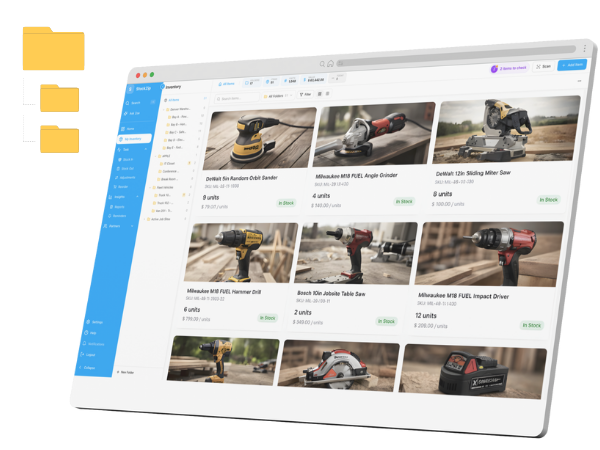
StockZip generates a unique QR code for every asset and scans it from a phone — both free. Printing formatted label sheets and the full check-in / check-out history are on the Starter plan and up.
Frequently asked questions
What's the difference between an asset tag and a barcode?
A barcode is one kind of asset tag. "Asset tag" is the umbrella term for any label or chip that uniquely identifies an asset — barcode, QR, RFID, NFC, GPS. So all barcodes used to identify assets are asset tags, but not all asset tags are barcodes.
Are RFID asset tags worth the cost for a small business?
Usually not under 500 assets. The tags themselves are cheap, but the reader and integration are where the money goes. If your bottleneck is "I want to scan a whole room at once" or "my staff hate line-of-sight scanning," RFID earns its keep. Otherwise QR on a phone is faster to deploy and a fraction of the cost.
Where should I place an asset tag on an item?
Somewhere visible without flipping the asset over, but away from edges and high-wear surfaces. On electronics, near a corner of the top face. On tools, on the body. On furniture, somewhere a chair leg won't scrape it. Consistency matters more than the exact spot — pick a rule and stick to it.
Can I make my own asset tags?
Yes for barcode and QR. A label printer (Brother, DYMO, Zebra) plus a roll of polyester stock and free QR-generation software gets you printing in an hour. RFID and NFC tags you buy pre-encoded or encode with a USB writer.