
MRO (Maintenance, Repair and Operations)
MRO (maintenance, repair, and operations) inventory is the consumable supplies, spare parts, and tools a business uses to keep operating — distinct from the direct materials that go into the products it sells. MRO is an operating expense, not part of COGS.
What it means
MRO is everything you buy to operate the business, as opposed to everything you buy to make the product. A bottling plant's glass bottles are direct materials (they're in the product). Its conveyor belt grease, replacement bearings, safety goggles, and forklift batteries are MRO (they're in the building, not the product).
A typical MRO list at a mid-sized warehouse looks like this:
• Pallet jacks, replacement wheels, hydraulic oil
• Forklift batteries, propane tanks, chargers
• Box cutters, packing tape, stretch wrap, dunnage
• Light bulbs, HVAC filters, exit signs
• PPE: gloves, hard hats, safety glasses, hi-vis vests
• Janitorial: degreaser, floor wax, paper towels
• Office: printer paper, toner, pens, batteries
• Hand tools, replacement saw blades, drill bits
Individually small. Collectively, MRO is often 5–15% of a manufacturer's operating spend, and most companies have no idea how much they actually own.
What counts as MRO inventory (the real list)
MRO breaks into a few rough buckets:
• Spare parts. Bearings, belts, motors, valves, sensors — anything you stock so a broken machine gets back up fast. A single bearing might cost $40 but an hour of line downtime might cost $4,000, which is why these get stocked.
• Consumables. Lubricants, adhesives, cleaning chemicals, welding rods, cutting fluid. Used up daily.
• Tools. Hand tools, power tools, calibrated instruments. Some are owned and tracked as assets; smaller ones are MRO.
• PPE and safety. Gloves, glasses, masks, hearing protection. Regulated, often expiry-dated.
• Janitorial and facility. Cleaning supplies, light bulbs, filters.
• Office supplies. The least exciting category but the one most likely to balloon when nobody's tracking it.
The dividing line is simple: does it go into the product the customer buys? If yes, it's direct materials. If no — even if it's critical to making the product — it's MRO.
MRO vs direct materials
People conflate these constantly, especially in smaller operations where one person handles both.
• Ends up in the finished product? — Direct Materials: Yes. MRO: No.
• Tracked on the BOM? — Direct Materials: Yes. MRO: Usually no.
• Cost allocation — Direct Materials: Cost of goods sold. MRO: Operating expense.
• Reorder pattern — Direct Materials: Demand-driven, forecasted. MRO: Usage-driven, sporadic.
• Ownership — Direct Materials: Production / planning. MRO: Operations / facilities.
Direct materials get the spotlight. They're on the BOM, the production plan, the cost sheet. MRO sits in a back room labeled "the cage" or "the storeroom" and gets bought through reactive purchase orders when something runs out — or worse, when something breaks.
Why MRO is so hard to track
Three reasons it slips through the cracks:
• Low individual value. A box of gloves is $20. Nobody's putting it through a formal requisition process. So it doesn't get counted, and the storeroom gets restocked by whoever notices it's empty.
• Scattered storage. Direct materials live in receiving and the warehouse. MRO lives next to the machine that uses it, in maintenance carts, in supervisor desk drawers, in the janitor's closet. No single source of truth.
• Ad-hoc purchasing. A technician needs a sensor right now, drives to the local industrial supply store, and expenses it. That sensor never hits an inventory record. Multiply by 200 technicians a year.
The combined effect: companies discover they have $50,000 of duplicate spare parts spread across three storerooms, expiring PPE in unmarked bins, and a "missing" calibration tool that's been on someone's desk for two years.
How to manage MRO without overengineering it
You don't need an enterprise CMMS to fix this. Three moves get most of the value:
• Categorize and label. Group MRO into 4–6 buckets (spare parts, consumables, PPE, janitorial, office, tools). Give each item a SKU and a bin location.
• Set reorder points on the top 20%. Pareto applies — 20% of MRO SKUs drive 80% of cost. Put min/max levels on those. The rest can stay on a "check monthly" rhythm.
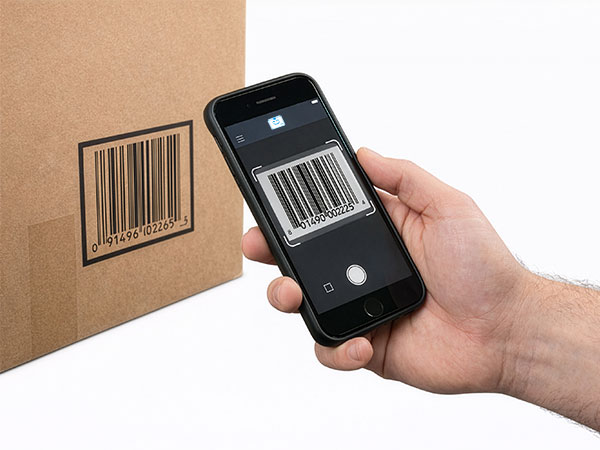
• Run one central storeroom with check-out. Even a single shelf with a scanner and a "who took what, when" log will eliminate 70% of the duplicate-purchasing problem within a quarter.
You'll know it's working when the maintenance team stops driving to the supply store at 7 a.m.
Track it in StockZip
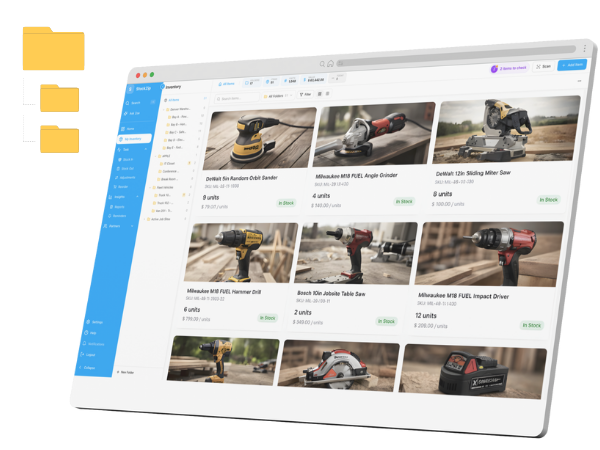
StockZip handles MRO inventory the same way it handles product inventory — SKU, bin, photo, reorder point. The check-in / check-out flow logs who took the last set of gloves and when, so the storeroom stops being a guessing game.
Frequently asked questions
What does MRO stand for?
Maintenance, Repair, and Operations. It refers to the supplies, spare parts, and tools used to keep a business running — distinct from raw materials that go into the products the business sells.
Is MRO the same as indirect materials?
Mostly yes. "Indirect materials" is the accounting term; "MRO" is the operations term. Both refer to inventory that supports production without ending up in the finished product. In practice they're used interchangeably.
How do you reduce MRO costs?
Three levers: consolidate vendors (you probably buy gloves from 8 different sources), set reorder points on the high-value SKUs so you stop emergency-buying, and centralize storage with check-in/check-out so you stop duplicate-buying.
Should small businesses care about MRO?
If you have any equipment that breaks, any staff who use PPE, or any consumables at all — yes. The dollar amount is smaller, but the percentage of operating spend can be just as high as a Fortune 500's. The fix is also simpler.